October 10, 2026
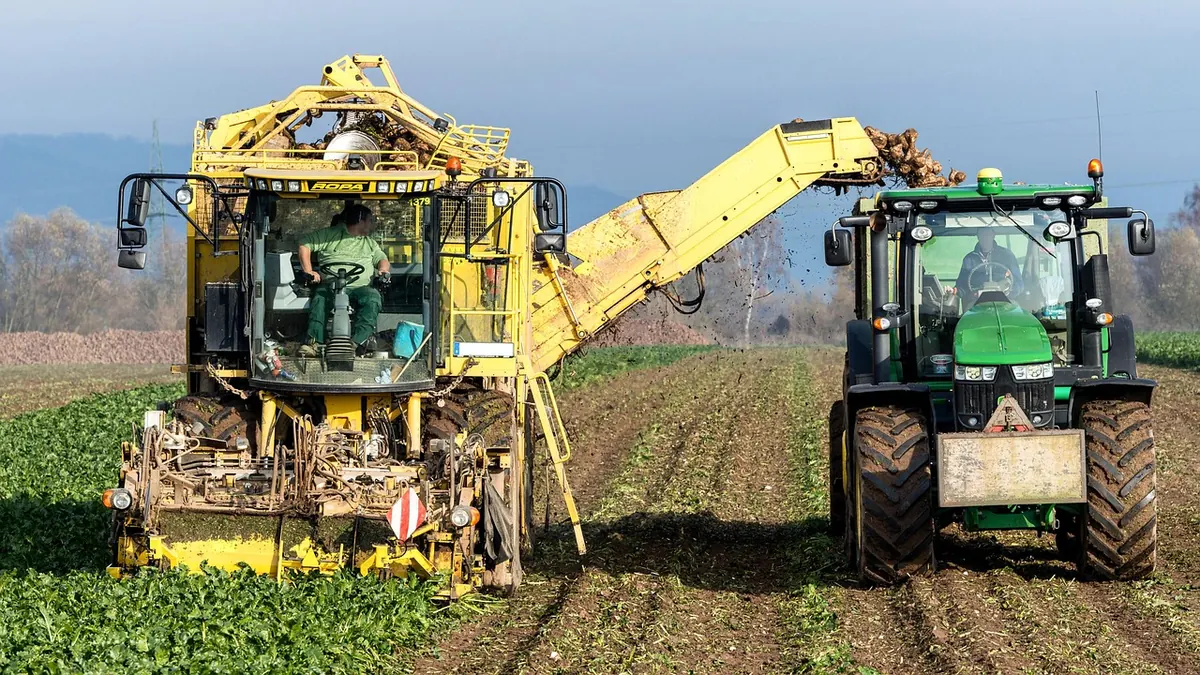
For a few evenings each autumn, the Moon behaves like a lantern someone forgot to turn off. It clears the horizon just as the Sun goes down, hangs low and amber over the fields, and keeps the yard bright long after suppertime. Two full moons share this trick: the Harvest Moon and the Hunter's Moon. They arrive roughly a month apart, they are often mistaken for one another, and the stories attached to them are not the same at all. One is about gathering in. The other is about what happens once the fields are bare.
Two Moons, One Long Season of Work
The Harvest Moon is the full moon closest to the September equinox. In most years that means September; now and then the September full moon comes so early in the month that October's is nearer the equinox, and the Harvest Moon arrives in October instead. The Hunter's Moon is simply the next full moon after that, usually in October and occasionally in November.
In the Northern Hemisphere, both names come out of the agricultural year rather than the sky itself. They mark stages of work: cutting and carting grain, then, when the stubble is cleared, hunting and putting by meat for winter. Observers south of the equator still see these full moons, but the labels fit awkwardly there, since the seasons are inverted and the September full moon rises over spring fields rather than ripe ones.
Timing: What Actually Separates Them
The famous "extra" light is not a trick of brightness. It is geometry. At mid-northern latitudes in autumn, the Moon's path makes a shallow angle with the eastern horizon at sunset. Instead of rising around fifty minutes later each night, as it does in spring, the Moon climbs only twenty to thirty minutes later for several nights running. So for a handful of evenings, sunset and moonrise nearly coincide.
For the Harvest Moon, this happens right at the moment the grain needs bringing in, and the old calendars noticed it. A farmer could finish the day's work, eat, and still have moonlight to carry on by. The Hunter's Moon inherits a weaker version of the same effect: the twilight gap is short, and the Moon appears while the sky is still pink.
A caution about dates
Do not plan a viewing around a fixed date. The Harvest Moon can fall anywhere from early September to early October, and the Hunter's Moon from early October to early November. Check a local moonrise table for the week you have in mind; a moon that rises at 6:40 p.m. on a Tuesday will rise close to 7:05 p.m. on Wednesday. That small drift is the whole story of these two moons in one line of numbers.
The Harvest Moon in Folklore: Lamplight for the Last Sheaf
In Britain and northern Europe, the Harvest Moon was a working light. It was the moon under which the last of the corn was cut and carted, and the end of that work was marked with harvest suppers and the "harvest home" celebrations that fell near Michaelmas at the end of September. Earlier in the season came the Corn Moon and the Barley Moon; a September full moon was also called the Wine Moon in grape-growing regions, and the Fruit Moon where orchards set the rhythm.
The same full moon carries a different weight elsewhere. The Mid-Autumn Festival in China falls on the fifteenth day of the eighth lunar month, close to this full moon, and is a night for mooncakes, lanterns and family gatherings. Korea's Chuseok falls at the same time of year, a harvest holiday of food and remembrance. Sukkot begins on the fifteenth of Tishrei, the full moon of the harvest month. Different hemispheres of meaning, one moon.
In popular folklore, this is also the moon that looks enormous as it rises. It does not grow. The Moon illusion makes a low moon seem larger against roofs and treetops, and the thickening atmosphere near the horizon reddens it. Expect orange, not silver, for the first half hour.
The Hunter's Moon: Blood Moon, Winterfylleth, and the Turning Year
Once the fields were cut, cover disappeared. Foxes, hares and deer came out to glean among the stubble, and hunters followed them by moonlight, both to protect next year's crops and to lay in meat before the cold. That practical sequence is the heart of the Hunter's Moon. It was often called the Blood Moon or Sanguine Moon in old almanacs — a name about the hunt and the autumn slaughter, not about eclipses. Modern usage has muddled the two, so if someone mentions a Blood Moon, ask which kind they mean.
The Anglo-Saxons called the October full moon Winterfylleth, the winter full moon, and treated it as the opening of the winter half of the year. Other names gathered around the same date — the Travel Moon, the Dying Grass Moon, the Falling Leaves Moon — all pointing at the same shift: the year is closing, and the light now serves the last errands before frost.
The Names Are Many, and They Don't Always Agree
Popular lists of moon names blend several traditions, and the tidy twelve-name set sold in almanacs is a later compilation rather than a single inherited system. Many Indigenous nations keep their own lunar calendars, with names tied to local plants, animals and weather, and those names differ from nation to nation and from region to region. Treat any list as a starting point.
- Harvest Moon — the full moon nearest the September equinox; the reaping light.
- Corn Moon, Barley Moon, Wine Moon, Fruit Moon — earlier or regional harvest names tied to specific crops.
- Hunter's Moon — the full moon after the Harvest Moon; the hunt, the cleared field.
- Blood Moon, Sanguine Moon — old alternative names for the October full moon, now often confused with eclipses.
- Winterfylleth — the Anglo-Saxon winter full moon, the year's turning point.
- Travel Moon, Dying Grass Moon, Falling Leaves Moon — descriptive names for the same season of departure.
How to Tell Them Apart on a Real Evening
- Look up the local moonrise time for three consecutive nights. If the gap is around twenty-five minutes, you are in the autumn window.
- Note the date against the equinox. Before or nearest to it, you are likely watching the Harvest Moon; the next full moon after that is the Hunter's.
- Watch the sky at sunset. The Harvest Moon arrives almost with the dark; the Hunter's Moon usually arrives before the last colour has left the west.
- Look at the ground, not only the sky. Standing grain and harvest trailers point one way; bare stubble and ploughing point the other.
- Mark where the Moon rises. The rising point shifts along the horizon night by night, and noting it on a fence post or doorway makes the drift visible.
A Short Field Guide for Watching Both
You need very little: a clear eastern horizon, a warm coat, and a note of the moonrise time. Be in position fifteen minutes early, because the best view lasts about half an hour — the low, coloured Moon against a familiar roofline or tree. Binoculars are genuinely useful here, turning a bright disc into craters and maria, though the Moon is too bright at full phase for comfortable viewing; catch it a night or two before or after for detail.
For photographs, expose for the landscape rather than the Moon, or the Moon becomes a white blob. Include a landmark — a chimney, a hill, a line of poplars — and the size illusion will do the rest. If cloud spoils the exact night, go out the evening before or after: the moonrise shift is small enough that both moons look full for several nights. Keep a brief log of date, time, colour and rising point. After two autumns, that log will teach you more about these moons than any list of names.
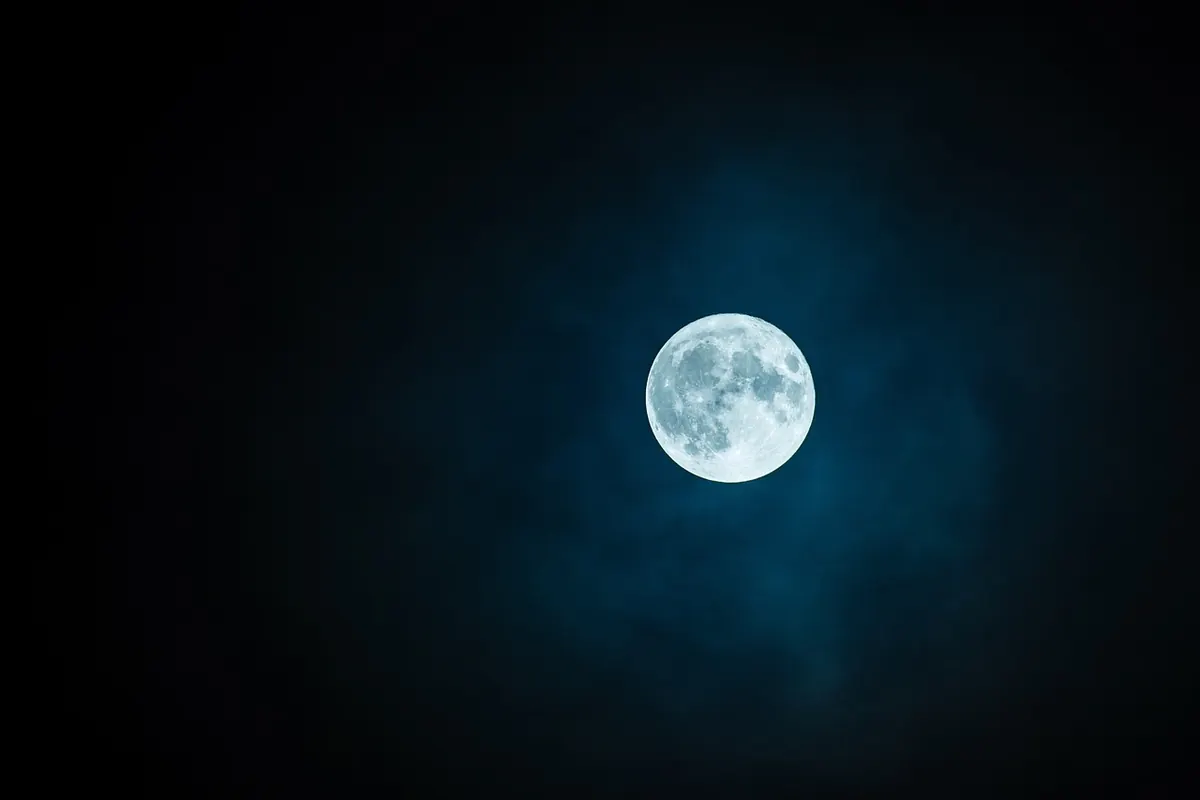
Photo: Wolfgang-1958 / Pixabay