October 23, 2026
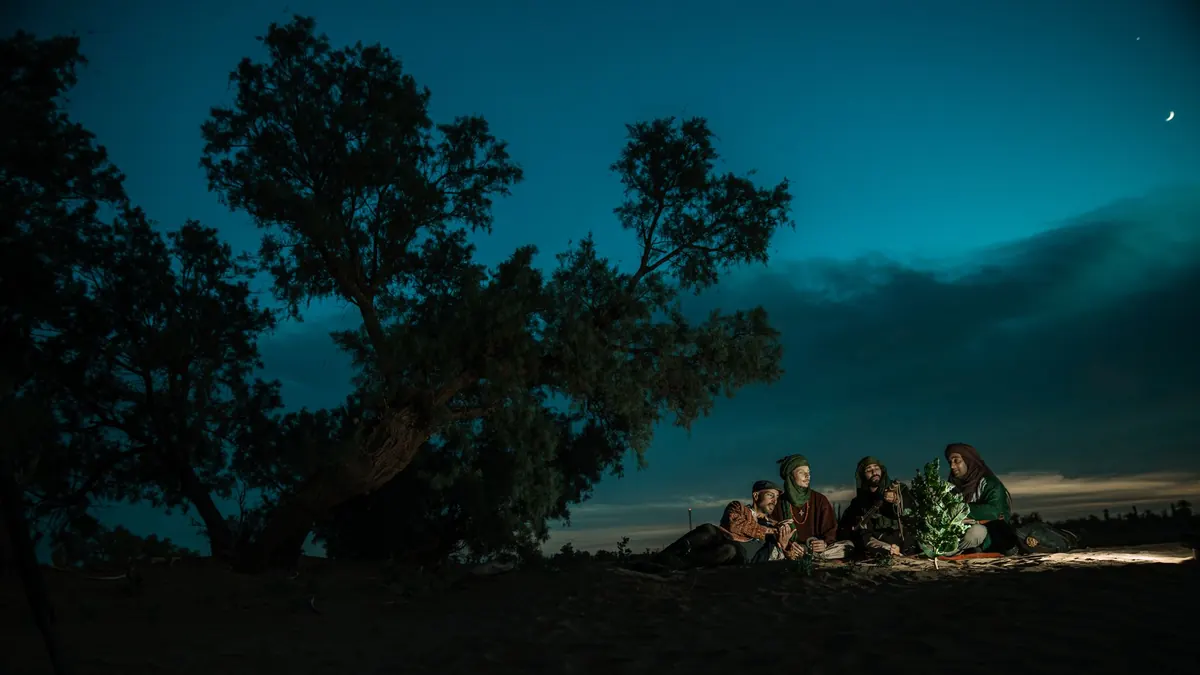
Step outside on a clear night and the moon does something odd: it looks close enough to touch and remains unreachable. That gap is where stories live. Cultures separated by oceans and centuries somehow ended up telling tales with the same shape — a visitor, a punishment, a sacrifice, a light that never quite becomes whole. You do not need a degree in folklore to enjoy them. You only need to know a handful well enough to recognise their echoes.
What follows are five lunar legends worth carrying around. Each comes from a different tradition, each can be told in a few minutes, and each leaves a slightly different aftertaste.
1. Chang'e and the Elixir of Immortality (China)
Hou Yi, a master archer, shot down nine of the ten suns that were scorching the earth and was rewarded with an elixir of immortality. His wife, Chang'e, kept it safe. Depending on the version you meet, she swallowed it to keep it from a thief, or out of curiosity, or to escape a husband who had grown cruel. Either way, she rose from the ground, drifted upward, and stopped on the moon — the nearest place she could go and still be seen.
There she stayed, with a jade rabbit pounding medicine and, in some tellings, a woodcutter named Wu Gang endlessly felling a self-healing tree. Hou Yi is said to have set out food for her, and this is one of the threads that leads to the Mid-Autumn Festival, when mooncakes appear in shops across East Asia and families look up at the same bright disc.
Notice what the story does with the moon. It is not a prize. It is a place just far enough away to make longing permanent.
2. The Hare Who Gave Away Everything (India, and far beyond)
In a Buddhist tale found in the Jataka stories, a hare, a monkey, an otter and a jackal agree to keep a fast day and offer food to any beggar who appears. The others bring what they can gather. The hare has nothing to give but grass, and grass is no gift. So when the disguised god Sakra arrives, the hare offers its own body, leaping into a fire the god has kindled.
The fire does not burn. Sakra reveals himself and, as a mark of the hare's generosity, draws its likeness on the moon for everyone to see.
That image travels remarkably well. In China the rabbit pounds the elixir of life; in Japan it pounds rice cakes; in one Aztec account a rabbit is thrown across the moon's face to dim its brightness. Different stories, same silhouette. If you have ever looked up and seen a hare rather than a face, you are in very old company.
3. Selene and Endymion: The Goddess Who Loved a Sleeper (Greece)
Selene drove the moon across the sky in a silver chariot, and on her way she passed over a shepherd named Endymion, asleep on the slopes of Mount Latmos. She fell in love with him exactly as he was — quiet, still, unreachable.
The versions disagree about what happened next. In some, Endymion chooses eternal sleep; in others, Zeus grants it to him, or grants him eternal youth in sleep. Either way the arrangement holds: she comes to him every night, and he never wakes to tell her anything. Some accounts give the couple fifty daughters, a number that quietly echoes the fifty months of an older Greek calendar cycle.
This is the legend to reach for when the moon looks less like a place and more like a person keeping watch. It also explains a certain kind of love story you will keep meeting: the one where the distance is the point.
4. Sin of Ur and the Crescent That Sails (Mesopotamia)
Long before Selene, the Sumerians and Babylonians gave the moon a name — Sin, also called Nanna — and a home in the great ziggurat at Ur. He was pictured with a lapis lazuli beard and a crescent that could be read as a boat gliding across the sky or as the horns of a bull.
What makes this tradition so useful is how closely the story follows the object. The moon god was a measurer: his phases set the month, his disappearance was watched for and interpreted, and the return of the crescent was a matter for the whole city, not just its priests. When the moon vanished, people worried. When it came back, they celebrated.
Most of us see the moon incidentally, on the way to a car. This tradition insists on the opposite: look every night, write down what you see, and let the sky keep your calendar for you.
5. The Man in the Moon with His Bundle of Sticks (Europe)
The European man in the moon is usually a trespasser. He is caught gathering sticks on a holy day, or stealing from a neighbour's hedge, or fetching water at the wrong hour, and the punishment is to be lifted up and set in the moon with the evidence still on his back — a bundle of thorns, sometimes a lantern, sometimes a small dog.
One strand of the tradition identifies him with Cain, wandering with his offering of thorns. Shakespeare mentions the man with his dog and bush of thorn; Dante places Cain in the moon too. The details drift from country to country, but the core stays put: someone broke a rule of rest, and the sky remembers.
It is a small, comic, faintly moral story. It is also, strangely, the legend most people have already half-heard without ever being told it properly.
What These Five Stories Have in Common
Read them side by side and the shared machinery becomes obvious. You start to see the same few moves repeated across continents.
- The moon as a destination for the displaced. Chang'e is not exploring; she is stranded. Exile, not adventure, is the usual ticket.
- Generosity that gets remembered. The hare's gift is not grand, but it is everything it has, and the moon becomes the noticeboard.
- Distance as devotion. Selene's nightly visit and Chang'e's yearly remembrance both turn separation into a ritual rather than an ending.
- Timekeeping. Sin's phases remind us that calendars were invented by people watching the moon and taking notes.
- Imperfect light. The rabbit dimming the moon, the man carrying his punishment, the crescent that wanes and returns — the moon is never shown as flawless.
None of these motifs require a shared origin. They cluster because the moon gives storytellers the same raw materials: a visible cycle, an unreachable surface, and a light that keeps going out.
A Short Practice: How to Read a Moon Legend Tonight
Folklore settles into memory when it is attached to something you have actually seen. Try this on the next clear evening.
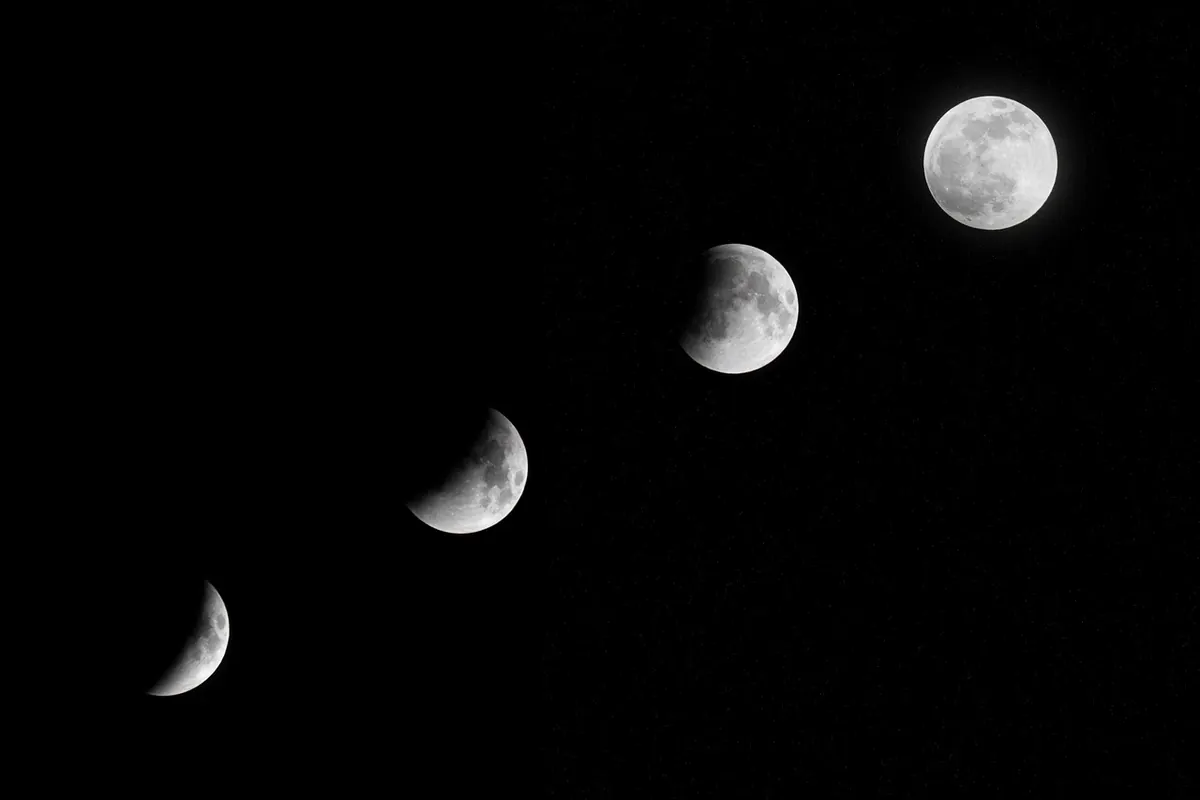
- Check the phase before you read. A crescent story lands differently when there is a crescent outside. Note it in a notebook or on your phone: date, phase, weather, and one plain sentence about how the sky looked.
- Read the version closest to its source. Look for a translation or retelling that names its tradition and, where possible, its collector. Children's picture books are pleasant but they smooth away the odd parts — and the odd parts are usually the interesting ones.
- Collect two versions of one legend. Chang'e alone has a dozen variants, and the differences show you what each teller cared about. This is the single fastest way to learn how folklore works.
- Tell it aloud from memory in under three minutes. Legends are oral machinery. If a detail refuses to stay in your head, it is probably not load-bearing.
- Keep a running list of the images you personally see. Hare, face, bundle of sticks, boat. Over a few months you will build a small map of your own sky.
Start with one story and one moon. The rest will follow on their own, the way they always have.
Photo: JIMMY Art / Pexels